
You make Christmas cookies every year, but how much do you know about them? Food and Wine has some facts for you that you probably haven't heard before. Here they are:
Reader Poll
Thanks for sharing your thoughts.
Want more like this? Subscribe for personalized picks.
Successfully subscribed.
Check your inbox for personalized content.
1. Queen Elizabeth I Invented Gingerbread Men
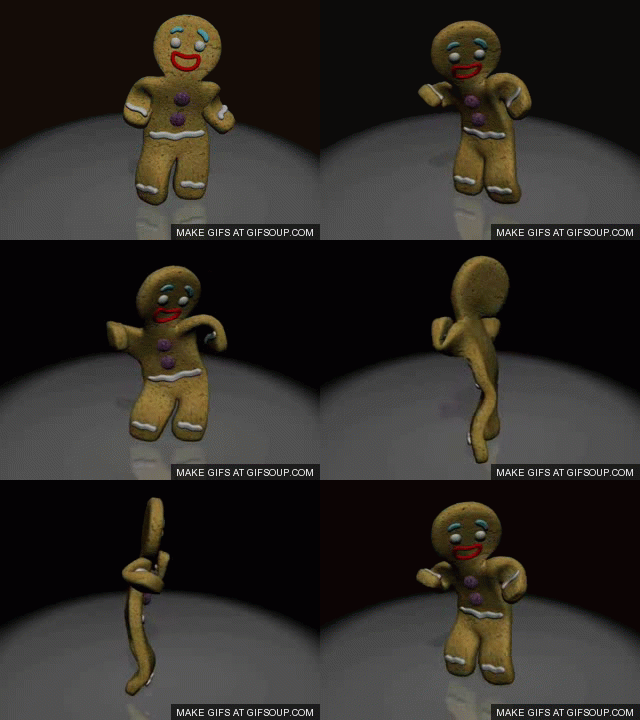 She asked her cook to create "gingerbread cookies shaped like visiting dignitaries in order to honor them."
***
Queen Elizabeth I is credited for inventing the modern gingerbread man. It is said that she asked her cook to create gingerbread cookies in the shape of visiting dignitaries in order to honor them. This tradition of making gingerbread men continues to this day, with the cookies often decorated with icing, candies, and other decorations. Gingerbread isn't the only type of cookie enjoyed during the holiday season. Other popular Christmas cookies include sugar cookies, shortbread, and spritz cookies. Cookies are often enjoyed with hot cocoa, eggnog, or mulled wine. Baking cookies is a popular holiday tradition and is often done with family and friends. It is said that the aroma of baking cookies can bring a feeling of warmth and comfort during the festive season.
2. We Leave Cookies for Santa Because of the Great Depression
 Santa didn't start receiving cookies until the 1930s. Why? Because it was a way for parents to encourage their children to be more giving and share during the depression.
***
Christmas cookies have a long history and have been around since the Middle Ages. The tradition of leaving cookies for Santa on Christmas Eve started in the 1930s during the Great Depression. Parents encouraged their children to be generous and share what little they had with Santa. This tradition has grown over the years and now many families leave cookies out for Santa, as well as milk and carrots for his reindeer. The most popular type of cookie left for Santa is the chocolate chip cookie. Other popular types include sugar cookies, gingerbread cookies, and oatmeal cookies. While many families leave cookies for Santa, some leave other treats such as mince pies, candy canes, and even cookies in the shape of Santa.
3. Cookies Were Originally Made to Test Oven Temperature
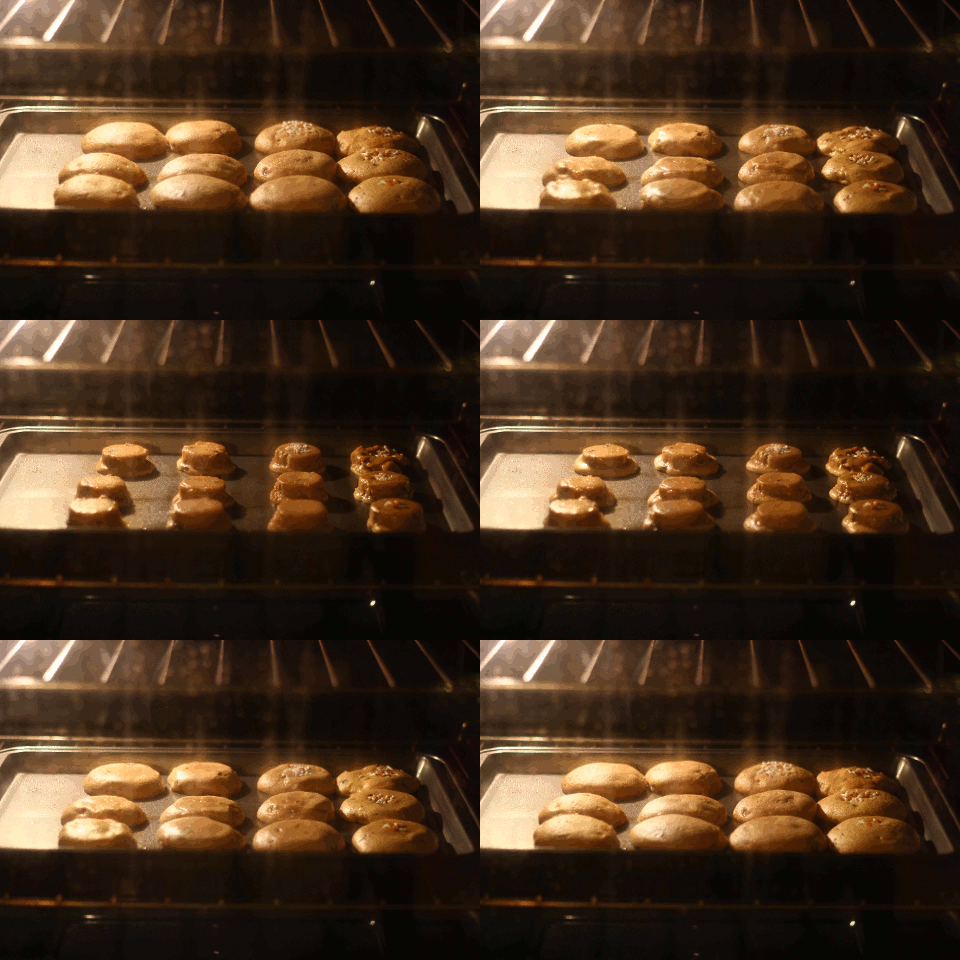 Cookies weren't originally meant to be eaten. They were just meant to test the temperature of an oven. "Cooks would take a small dollop of cake batter and bake it as a means of gauging whether the oven was ready or not."
***
Cookies have been around since the 7th century, but they didn't become popular until the 19th century. It wasn't until the invention of the cookie cutter in the early 1800s that cookies began to take on their current shape. Chocolate chip cookies were first invented in 1938 by Ruth Wakefield, who ran the Toll House Inn in Massachusetts. In the 1950s, the chocolate chip cookie became a national sensation due to the popularity of the Nestle Toll House Cookie Recipe. Today, cookies are a popular treat all over the world. In the United States, the most popular type of cookie is the chocolate chip cookie, followed by sugar cookies, peanut butter cookies, and oatmeal raisin cookies.
4. Gingerbread Men Were Illegal in Some Places during the Reformation
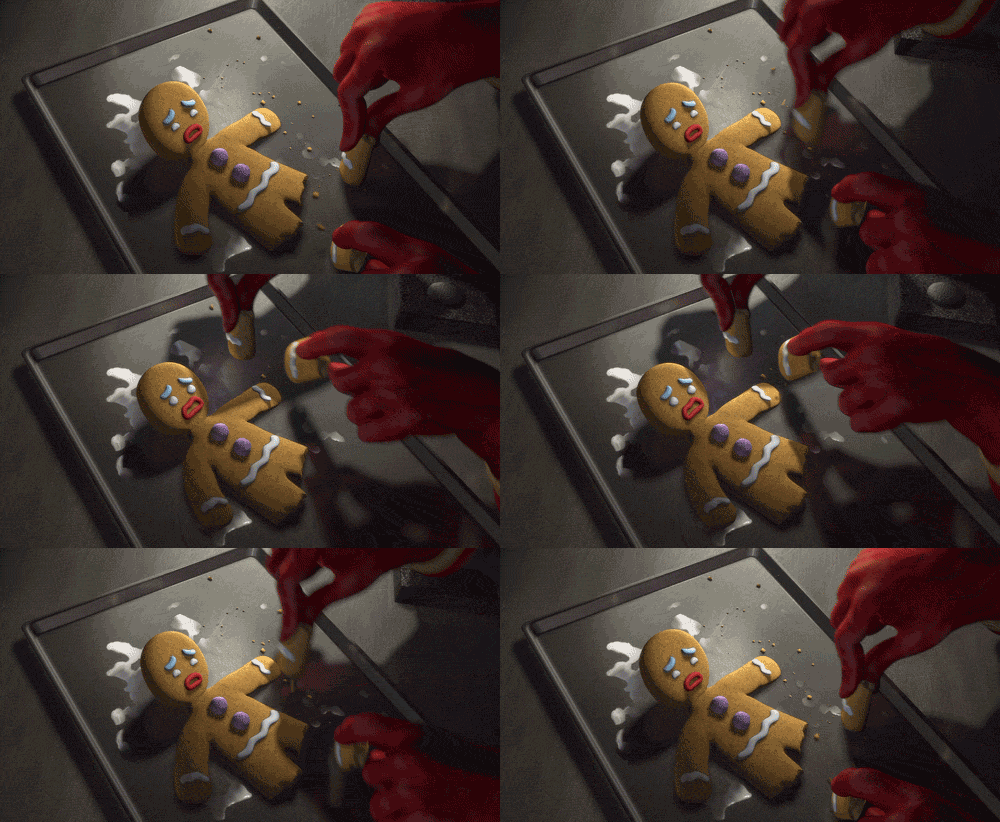 Since Martin Luther was against Christmas, "the city of Delft in the Netherlands forbade the sale of gingerbread men" for a period of time.
***
During the Reformation, Christmas was not widely celebrated, and some places even went as far as banning the sale of gingerbread men. This was because Martin Luther was against the celebration of Christmas during this period. Other Christmas-related treats such as Lebkuchen and Pfefferkuchen were also banned in some places. Gingerbread cookies have been around since the 16th century, with the oldest known recipe dating back to the court of Queen Elizabeth I. The cookies were originally made with honey, spices, and breadcrumbs. In the 19th century, the recipe changed to include molasses and ginger, giving the cookies their distinctive flavor. Today, gingerbread men are a popular Christmas treat and can be found in many shapes and sizes.
As part of taking control over your health and wellbeing, it's important to pay attention to the amount of sugar you consume daily. Did you ever wonder how many grams of sugar are in a teaspoon? Understanding this can help you make healthier choices and avoid those sneaky sugars that add up throughout the day. No doubt, your body will thank you!
5. Santa Claus Eats over 300 Million Cookies on Christmas Eve
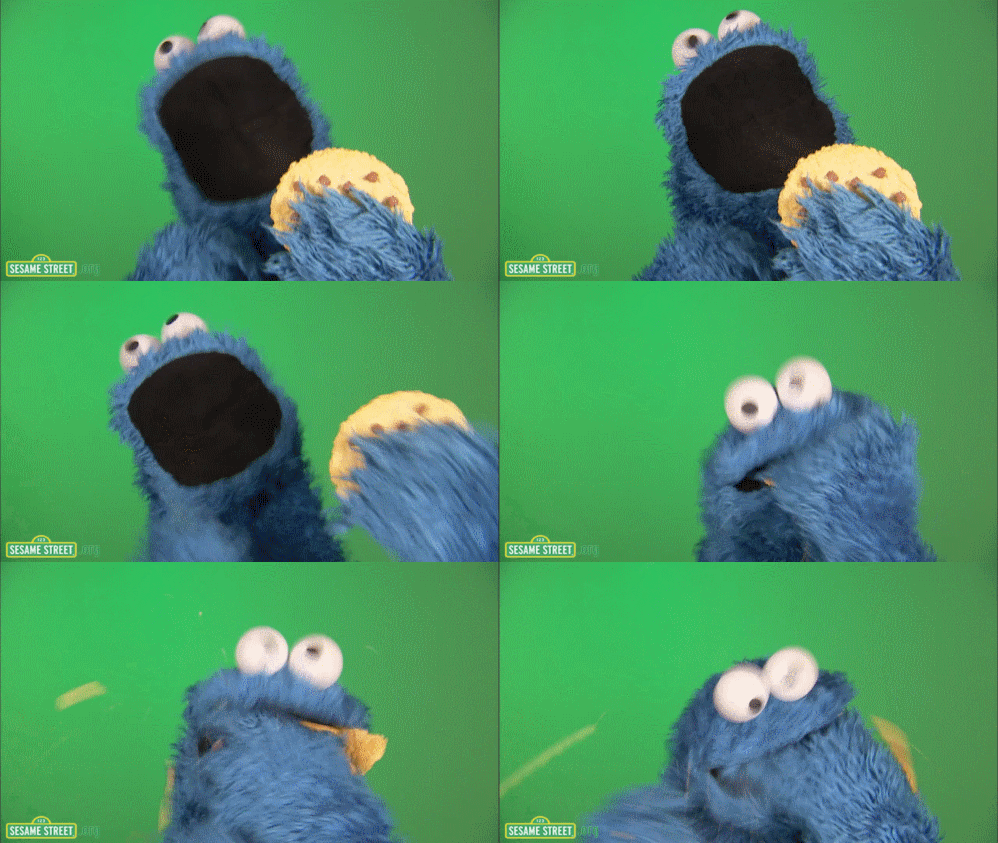 If Santa is visiting over 500 million homes, and eats at least a few bites of a cookie at every house, then that means he's eating around 336,150,386 cookies.
What other Christmas cookie facts do you know?
Reader Poll
Thanks for sharing your thoughts.
Want more like this? Subscribe for personalized picks.
Successfully subscribed.
Check your inbox for personalized content.
Add allwomenstalk.com as a preferred source on Google to see more of our trusted coverage when you search.

Don't Miss the Latest Version
Get the latest stories, save favorites, and share with friends — all in one place.

New Earn badges & level up while you read
Create your profile. Earn badges. Level up your reading.
Join Allwomenstalk to track your streaks, collect badges, and earn XP for the things you already do—reading, sharing, and taking quizzes.
- 🔥Daily streaks with gentle boosts for 3, 7, and 30 days.
- 🏅Collect badges like Reader I–III, Socialite, and Quiz Ace.
- ⚡️Earn XP for reads, deep reads, likes, comments, and shares.
It’s free. Takes 30 seconds. Already have an account? Sign in.


Feedback Junction
Where Thoughts and Opinions Converge
2015-12-22T19:54:45.957Z
2015-12-22T21:14:51.588Z
2015-12-23T02:58:14.528Z
2015-12-22T16:59:59.636Z
2015-12-23T02:59:33.228Z